Robert Winters – Cambridge City Council Candidate – 2025
Cambridge Municipal Election - Tuesday, November 4, 2025
The Issues
Since you asked … and even if you didn’t … here are my top priorities and concerns:
- The City Charter – I felt that the entire Charter Review process was flawed from beginning to end. That said, I plan to vote for the new Charter - not because it’s perfect or what I would ideally want, but because it met my minimum requirements: [Read more on the Proposed City Charter here.]
- allow the Election Commission the freedom to approve a tabulation method for the PR Count that is independent of the order in which the ballots are counted;
- maintain the city manager form of government;
- maintain the practice of the City Council electing its own Chair, i.e. The Mayor;
- allow the School Committee to choose its own Chair.
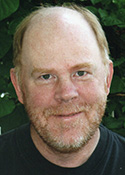
- Civic culture, public participation, and civic unity – For the last several decades I have been doing all that I can to promote a civic culture that involves public participation, education of voters and all residents, and the goal of fostering civic unity over factionalism. To this end I created the Cambridge Civic Journal, the CCJ Forum, the Cambridge Candidate Pages, a voluminous archive of election-related documentation, and more. I have also hosted ~650 episodes (and counting) of the revived broadcast Cambridge InsideOut. I absolutely express personal opinions (don’t we all?), but the main thrust is always public information and encouragement of civic participation. The Cambridge Candidate Pages, however, have always been just the statements of candidates and their links and contact information without any editorializing. Their sole purpose has always been to level the playing field among all candidates so that any role of campaign finance is reduced.
- I agreed with allowing multi-family housing in all residential zones, but I would not have voted to make all residential zones identical, with much greater heights and densities, with barely any side and rear yard setbacks, and with essentially no review of project proposals. I also feel that the previous regulations that waived parking requirements near transit was far superior to what was passed this last year that eliminated parking requirements everywhere. A broad brush doesn’t generally lead to a better outcome.
- I have significant concerns about the currently proposed upzoning along Mass. Ave. from the Cambridge Common all the way out to the Arlington Line. I would not vote for what is now being proposed - though I would support allowing somewhat greater heights along that corridor. In addition, it seems inevitable that when as-of-right heights and densities are dramatically increased, that will remove any economic incentives for AHO projects and almost certainly lead the current City Council (should they be reelected) to further revise the AHO to allow even greater heights for AHO projects - likely on the order of 18-25 stories. I would not vote for that. This is an unsustainable path - more like a dare than a plan.
- Balancing the needs of local businesses and residents in all matters of traffic, parking, and all forms of transportation. – Our roads need to meet the needs of all of us, and constantly pitting one form of transportation user against others is both offensive and impractical. Cyclists want and need greater safety on our roads, but suggesting that the only way to build in that safety is via mandates and rigid timelines and one monolithically preferred treatment of roads (that were never properly reviewed) is the antithesis of good planning. Some of the treatments the City has recently done create clear hazards for motor vehicles, pedestrians and even cyclists. There are also many situations where curb access is essential for abutting property owners and for vehicles making deliveries. This includes Broadway (where I live), and I remain strongly opposed to the City’s current plan to permanently congest Broadway and remove most of the parking and curb access. By the way, my bicycle was my primary mode of transportation for most of the 47 years I have lived in Cambridge. I was also in the group who first marched up to City Hall over 30 years ago to demand that a Bicycle Committee be established.
- Full accounting of the relationship between City initiatives and municipal finance – During every political campaign, many candidates are willing to promise you the moon, the stars, and more - without ever mentioning how to pay for any of these promises. Commercial taxes are seen as a bottomless punchbowl from which we can refresh the City’s coffers, but more recently the rapidly growing City Budget is now reaching over into residential taxes - especially one- to three-family property owners.
- Addressing matters of energy resources, transportation, and the affordability of housing comprehensively and in partnership with all cities and towns in the Greater Boston region. What we have seen over the last several years is a trend toward unilateralism and the false belief that any one city or town can deliver housing affordability. Devoting enormous sums of City tax revenue to create deed-restricted housing may provide some benefit to those lucky enough to access that subsidized housing, but this fails to address the greater challenge of balancing what people can pay against the high costs of rent or the purchase of a home. Also lacking in the City’s approach is that - like it or not - building equity in one’s home is an essential element in building the kind of wealth to sustain not only the current occupants but also the next generations of those families - and this is especially true for people who have historically been marginalized.
- Choice, Incentives, and Education – Not Mandates – In regard to energy resources, it’s easy to pass ordinances mandating transitioning away from fossil fuels and toward electric utilities, but unless the electric grid can support all that additional electrification this is just a fool’s mission. It’s also important to respect the personal choices that people make and not simply subject people to government (unfunded) mandates. Even though we passed a “Mandatory Recycling Ordinance” over 30 years ago as a pre-condition to create our curbside recycling program, the emphasis from our Public Works Department has always been on education and assistance with enforcement and penalties only after all else had failed. [I was on the Recycling Advisory Committee for 22 years, by the way.] Cambridge residents can generally be depended upon “to do the right thing” when they understand all the choices and consequences. Property owners need some degree of flexibility and choice in how to manage their property - even as we strive to restore our tree canopy. Property owners need to be able to make good economic choices in building improvements and utilities, and they can generally be counted on to make good choices as long as there are incentives available to transition toward more environmentally-friendly alternatives.
- Revival of local journalism and democracy – This is an ongoing battle to restore and augment the kind of journalism that is an essential part of a healthy democracy. There was a time when several local newspapers covered City Council meetings and a whole range of civic affairs in Cambridge. Reporters even had their own table in the City Council chamber and their names even appeared in the City’s annual reports. The Cambridge Chronicle came into existence at the same time that Cambridge transitioned from a town to a city - two peas in a pod. Civic journalism has to be more than just blogs and mailing lists. We need a common “water cooler” around which we can all gather to discuss matters of importance outside of our own personal silos. We also need a common space where we can promote and report on all of the non-political aspects of life in Cambridge – births, deaths, announcements, youth sports, local businesses, public safety, and a whole lot more. It is a tragedy that the ownership of the Cambridge Chronicle continues to abandon its role as “the oldest weekly newspaper in America”. It is wonderful that other entities are stepping up to partially fill this void, but we really do need a “paper of record” that transcends the lifespans of all of us involved in this mission - and that means both print and electronic media of all forms.
- Affordability of housing and everyday living – I have provided housing at affordable rents to my tenants for 40 years. I want there to be housing options that are affordable to people with a broad range of incomes and circumstances in Cambridge as well as in the whole region, but I do not believe that simply declaring an emergency should give City appointees or developers - nonprofit or otherwise - unfettered license to do as they please and in a manner that is dramatically contrary to prevailing development patterns or the base zoning for a given area. We have Special Permit processes that grant some reasonable additional height and density if certain criteria are met and subject to approval by the Planning Board. That kind of process is greatly preferable to the current or proposed revisions to the so-called “Affordable Housing Overlay” (AHO) and the misleadingly named “Multi-Family Housing Zoning” that was adopted earlier this year. [Note: Few people objected to allowing multi-family housing citywide. The essential aspect of this zoning was its considerable upzoning, the blenderizing of all residential zones into a single zoning category with greater heights and densities than any of the previous residential, the dramatic reduction of setbacks from property lines, and the obliteration of any and all meaningful review (making everything “as of right” with no means of objecting or requiring changes so that new development proposals might better fit in with existing neighborhoods). Simply saying “we have to do something” should never provide license to do something you may later come to regret.
Here’s an excerpt for the notes of the October 11, 2018 meeting of the Envision Cambridge Housing Working Group. The “One member” referenced here was me and my views on this subject have not changed:
“One member expressed his frustration that the group was focusing as much as it was on policies and targets related to regulated affordable housing, rather than addressing general housing affordability. He said that he hoped the Envision process would help address housing affordability. He said that while he would support increasing density throughout the city, he expressed concerns about the affordable housing overlay which he thought would unfairly advantage one type of developer over another. He suggested that it might not be legal to provide zoning benefits to developers of affordable housing over any other type of developer. He said that he believes that if the community wants more regulated affordable housing, the City should use tax dollars to pay for that rather than through zoning. Several members pointed out that there were several other actions in the group’s recommendations designed to address general affordability issues and that the overlay is just one approach to help solve the affordability problem in Cambridge. It was also noted that there are other ways to expand the existing stock such as additions, basement units, accessory units, and the like.”
Other than the subsidized housing now in the pipeline via the AHO, have rents and home prices become more affordable?
A Different Kind of Candidate
I’m not here to promise you the world or to slay any dragons. I simply want to be your representative. I also have a regular job that means more to me than anything else.
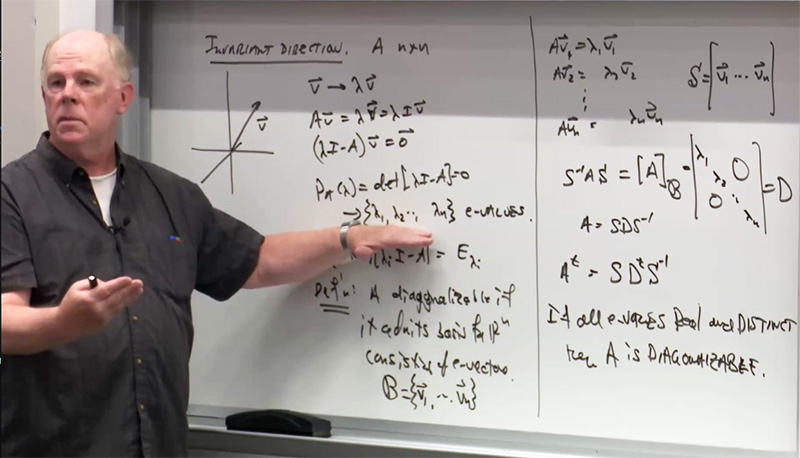
I also have a Ph.D. in Mathematics and currently teach Multivariable Calculus, Linear Algebra, and Ordinary Differential Equations courses at the Harvard Extension School and the Harvard Summer School. I have previously held various faculty positions at Boston University (1 year), Wellesley College (14 years), Harvard University (8 years in the Harvard Mathematics Department, 25 years with the Harvard Extension School, and 27 years with the Harvard Summer School), Brandeis University (1½ years), and the Massachusetts Institute of Technology (9 years).
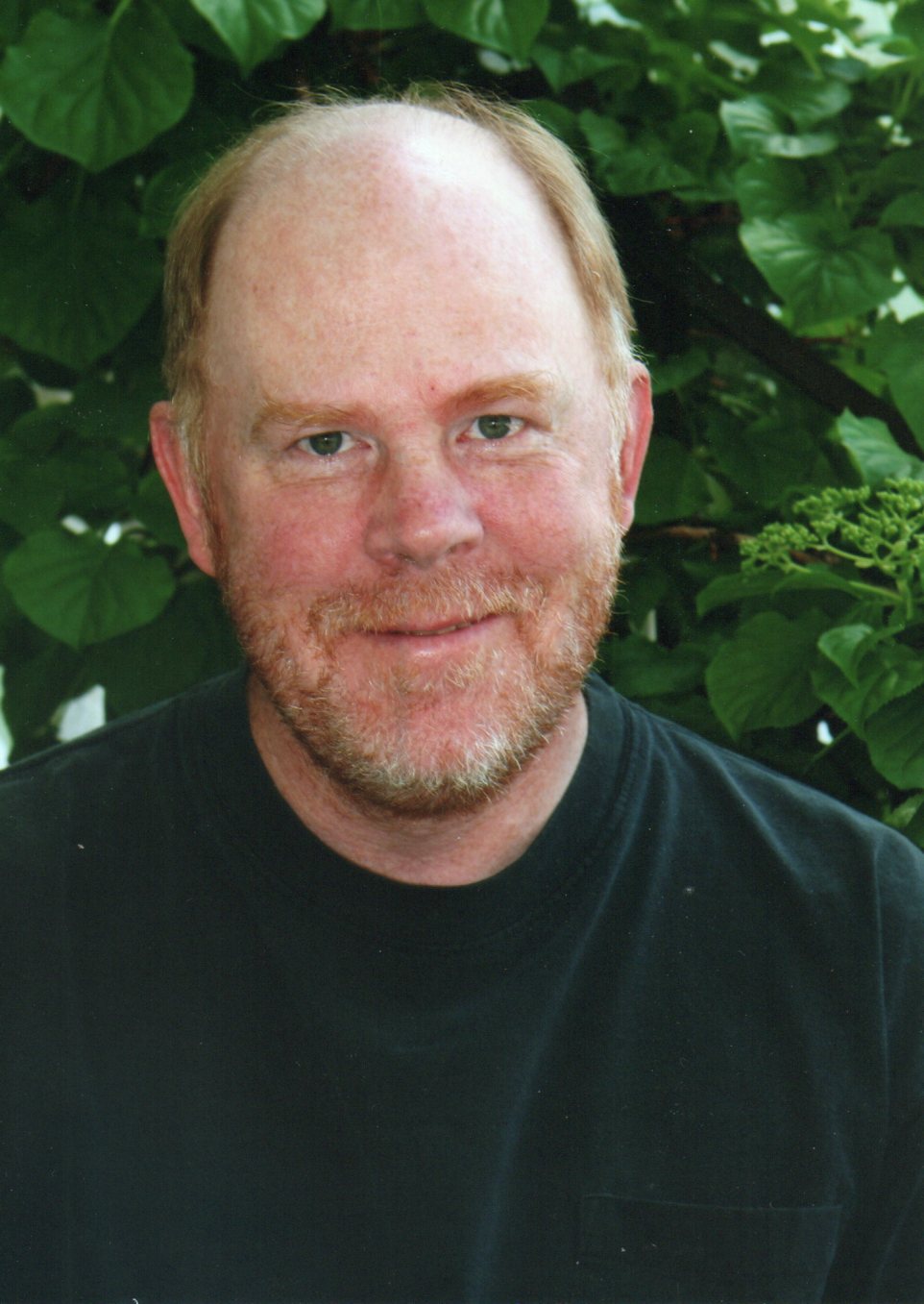 As I mentioned above, I am neither a dragon-slayer nor someone who would ever feel comfortable making big promises that only a majority of city councillors and the cooperation of City staff could ever possibly deliver, but I can list a number of statements, principles, priorities, and ideas that may either distinguish me from other candidates or make me sound just like the other candidates. Here’s a list:
- The job of a city councillor is to listen to residents and to represent them - first and foremost.
- A “90% solution” is almost always better than a “mandate” that either does damage to some residents or greatly angers a sizable number of residents.
- Incentives and education are generally better than mandates.
- Though my principal mode of transportation during my 47 years in Cambridge was my bicycle, I am very sympathetic to the concerns of residents, motorists, and business operators who have been subjected to “quick-build” separated bicycle lanes that in some cases have turned relatively quiet roads into obstacle courses. Some of these have been improvements, and some have not. All policies need to be regularly reviewed and possibly amended, and I would never sign a “pledge” swearing to never reconsider any given policy or ordinance, including the Cycling Safety Ordinance.
- I completely agree with the goal of weaning people off fossil fuels as one part of combatting problematic climate changes. That said, I also believe in allowing people to make choices based on economic, aesthetic, and practical considerations. Altering building codes to have new buildings meet new standards is desirable, but we should never sweat the small stuff like forcing residents or houses of worship to pay for exhorbitant retrofits that yield minimal gains. In addition, policy-makers need to take into account what the existing regional infrastructure can actually deliver and at what cost.
Robert Winters
366 Broadway, Cambridge, MA 02139
Tel: 617-661-9230
Robert@rwinters.com